
What to Write For Your Band Website, A Practical Guide
Published June 16, 2026
One of the mistakes indie musicians make when building a website is treating it as a place to just dump whatever rather than creating an experience for visitors A website is not an online storage locker for photos, social links, old bios, etc… It should act as a central hub to help people understand who you are, what kind of music you create and how casual web visitors can continue engaging with your music.
💡 More Info: What's a Fan Journey?
Start With The Goal Before You Start Writing Stuff
It may be obvious but it’s good to write this down, what do you want a web visitor to ultimately do? Sign up for your mailing list, follow you on socials, listen to your latest release, buy merch? What is valuable to you based on the examples I’d suggest:
- Buy merch
- Collect email addresses
- Follow, like and share on socials
- Listen to latest release
Every piece of content on your website should answer one question: why should somebody care about your music? If your website cannot answer that, it becomes a collection of pages instead of a system that turns discovery into fandom.
Overall, Think of Fan Actions Instead of Just Web Pages
If you think about actions and not “web pages” you start to connect the dots and start building a website that is meant to drive conversions (merch, signups, etc.). Fans may want to do a few things when visiting an artist website, such as listen to music (even if samples), find other social accounts, join an email list, buy merch, attend a show or just to learn more about the artist. If somebody finishes reading your About page and there is nowhere obvious to go next, you have created friction as part of the overall fan journey. I am not going to drill into things like Information Architectures and overly detailed content strategies because creating great purposeful content can be simple-ish.
Your Homepage is a Handshake, Not a Complete Emotional Dump!
Your band's homepage is a first-impression opportunity to show visitors that you take your music seriously and have invested time into building your project. People will arrive from Google searching your band name, YouTube or a Facebook link. Typically visitors form an impression very quickly, so clarity and simplicity matter. A strong home page should answer:
- Who are you?
- What do you sound like?
- What should I listen to first?
- What should I do next?
Sounding human is important, it shouldn’t read like a press release at all! Resist the temptation to explain everything on this page and think about what actions need to take place. I suggest just one but we can get away with 2 I’d say. Also the home page can be dynamic, you should be able to change it to be part of a release strategy as an example.
Your About Page Should Build Human Connection
It’s not a full career timeline or a long generic “artist bio” section. The goal (in theory) should be to build context and authenticity. Explain who you are, why you make music, who inspired you, your writing style, etc… Give the would-be fan a reason to connect with you and your journey. Make them compelled to become a fan. That won’t happen with corporate jargon (well less likely to happen). Sounding human is usually far more effective than sounding like a press release, don’t let AI create static here either. This should come from you. Share images, be vulnerable and open (but not incriminating lol).
Your Music Should Be Well Represented
Album art works best when it reflects the music, genre, or overall brand you are trying to build. It should show some effort and be consistent across all media. Song descriptions should also tell the story behind the song and appeal to shared taste “if you like that, you will like this”.
Also avoid unnecessary barriers. Do not assume every visitor has Spotify installed or even uses Spotify at all. Short self-hosted previews allow visitors to quickly sample your music before asking them to jump to a third-party platform. Consider treating music pages like simple landing pages whose purpose is to encourage listening and further engagement.
💡 More Info: More details on writing song descriptions
Keep Your Website Simple And Current
You may assume that bigger websites are better websites, but simplicity usually wins. A small number of well-maintained pages often performs better than dozens of pages that are rarely updated. Spend a few minutes every month checking your links, updating your latest release, refreshing old content, and ensuring your website still represents your project today. An outdated website can unintentionally make an active artist appear inactive.
I see a lot of poorly made band websites for indie musicians, not because the tech they are using is bad. But because it looks like the person charged with managing such things just needs a bit of guidance.
At the end of the day, band websites do not need to be complicated. If a visitor can quickly understand who you are, what your music sounds like, and what they should do next, your website is already accomplishing its job. The easier you make it for somebody to continue their journey with you, the more valuable your website becomes. Most visitors arrive with curiosity but very little context, so your content should focus on guiding them rather than overwhelming them.
Your Website Is Part Of A Bigger Ecosystem
Your band website should not operate in isolation. People will discover you through streaming services, social media, local shows, online communities, or recommendations from friends. Your website simply connects all of those channels together and gives visitors a place where they can learn more without fighting algorithms and endless distractions. Social media platforms are excellent for discovery, but your website is one of the few digital assets you fully control.
Don’t Let SEO Drive Your Content
I do not generally recommend an SEO-first approach. The first SEO (and maybe only) priority for most independent artists should be owning searches around their artist or band name. If someone searches your band name and close variations of it, your website should ideally appear near the top of the results.
If your music genuinely shares characteristics with a well-known artist, mentioning that naturally in your content can help visitors quickly understand your sound. Comparisons should be honest and authentic rather than added solely for search engine purposes though.
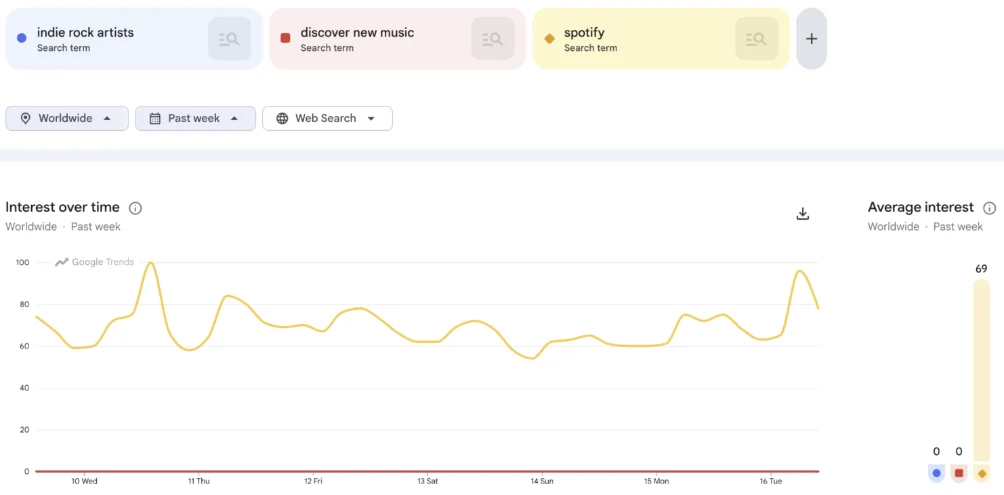
Discovery often happens through recommendations, social media, playlists, live performances, communities, and algorithmic suggestions rather than broad search terms. The Google Trends example below illustrates why building a website exclusively around generic keywords may not be the highest return activity for many independent artists.
Ready to Build Your Band Website?
Get started in minutes with no credit card, no time limits, no hassle. Includes built-in AI tools to help you write bios, song descriptions and even artwork!